
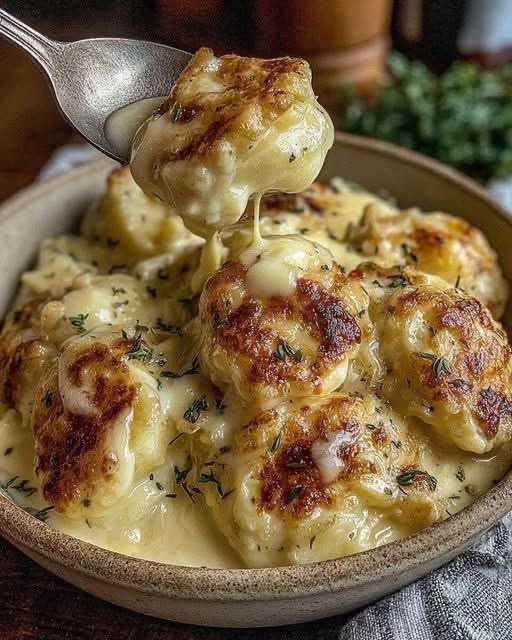
A rustic, comforting classic from Central European home cooking
German Cabbage with Dumplings is a deeply satisfying dish built on humble ingredients—tender cabbage, aromatic onions, and soft, pillowy dumplings. It’s the kind of meal that reflects traditional German cooking: practical, nourishing, and full of comforting flavor. Often served as a main dish in simpler households or as a hearty side to meats, this recipe celebrates cabbage as the star.
Introduction
In German cuisine, cabbage is more than a side dish—it’s a foundation of everyday cooking. Combined with dumplings, it becomes a filling, warming meal perfect for cooler days. This dish developed in rural regions where families relied on vegetables that stored well through winter. The result is a simple yet soulful plate that delivers both comfort and tradition.
Ingredients (with Quantities)
For the Cabbage
- 1 medium green cabbage (about 1.2–1.5 kg), thinly sliced
- 1 large onion, finely chopped
- 3 tbsp butter or lard
- 1 tsp caraway seeds (optional but traditional)
- 1 tsp salt (adjust to taste)
- ½ tsp black pepper
- ½ tsp sugar (optional, to balance acidity)
- ¼ cup vegetable or chicken broth
For the Dumplings (Knödel-Style)
- 2 cups all-purpose flour
- 1 tsp salt
- 1 large egg
- ¾ cup milk (as needed)
- 1 tbsp butter, melted
Instructions
Cook the Cabbage
- Melt butter or lard in a large skillet or pot over medium heat.
- Add chopped onion and sauté until soft and lightly golden.
- Stir in caraway seeds, cabbage, salt, pepper, and sugar (if using).
- Cook uncovered for 10–15 minutes, stirring occasionally, until cabbage wilts.
- Add broth, reduce heat, cover, and simmer 20–30 minutes until cabbage is tender and slightly caramelized. Adjust seasoning.
Prepare the Dumplings
- In a bowl, mix flour and salt.
- Add egg and gradually stir in milk until a soft, sticky dough forms.
- Stir in melted butter.
- Bring a large pot of salted water to a gentle boil.
- Using a spoon or damp hands, drop small dumplings into the water.
- Cook 3–4 minutes, until dumplings float and are tender. Remove with a slotted spoon and drain.
Assemble
- Gently fold dumplings into the cabbage or serve them nestled on top.
- Finish with a small knob of butter if desired.
Origin and Cultural Significance
This dish is rooted in rural German and Austrian kitchens, where cabbage and flour-based dumplings were everyday staples. It reflects a culture of practicality—meals designed to nourish hard-working families using affordable, long-lasting ingredients. Variations of this dish appear across Bavaria, Swabia, and neighboring regions, often passed down through generations.
Description and Flavor Profile
German Cabbage with Dumplings is mild, buttery, and comforting. The cabbage becomes soft and slightly sweet, especially when gently caramelized, while the dumplings are tender and neutral—perfect for soaking up flavor. Caraway seeds add a subtle earthy warmth that defines many traditional German cabbage dishes.
Optional Additions and Variations
- Add crispy bacon or pancetta for extra richness
- Stir in a splash of apple cider vinegar for brightness
- Use cream instead of broth for a richer version
- Serve alongside bratwurst, smoked sausage, or roasted pork
Tips for Success
- Slice cabbage thinly for even cooking
- Don’t overcrowd dumplings in the pot—cook in batches
- Keep the boil gentle to maintain dumpling shape
- Taste and adjust seasoning at the end
Nutritional Information (Approximate, per serving)
- Calories: 320–380 kcal
- Protein: 9–12 g
- Fat: 14–18 g
- Carbohydrates: 38–45 g
Values vary based on butter and portion size.
Conclusion
German Cabbage with Dumplings is a beautiful reminder that comfort food doesn’t need to be complicated. With its soft textures, gentle flavors, and satisfying heartiness, it’s a dish that brings warmth to both body and spirit.
Recommendation
Enjoy this dish on a cold evening with a slice of rustic bread or as a comforting vegetarian main. It also pairs wonderfully with sausages or roasted meats for a more traditional German-style meal.

Leave a Comment