

Douglas’s impact extended well beyond his most famous roles. He was never content to play it safe, frequently choosing projects that challenged audiences and questioned authority. His characters were often flawed, driven, and intense—men wrestling with ambition, morality, and inner conflict. That fearless approach set him apart in an era when many stars were carefully managed to avoid controversy. Douglas, by contrast, leaned into complexity, helping redefine what a Hollywood leading man could be.
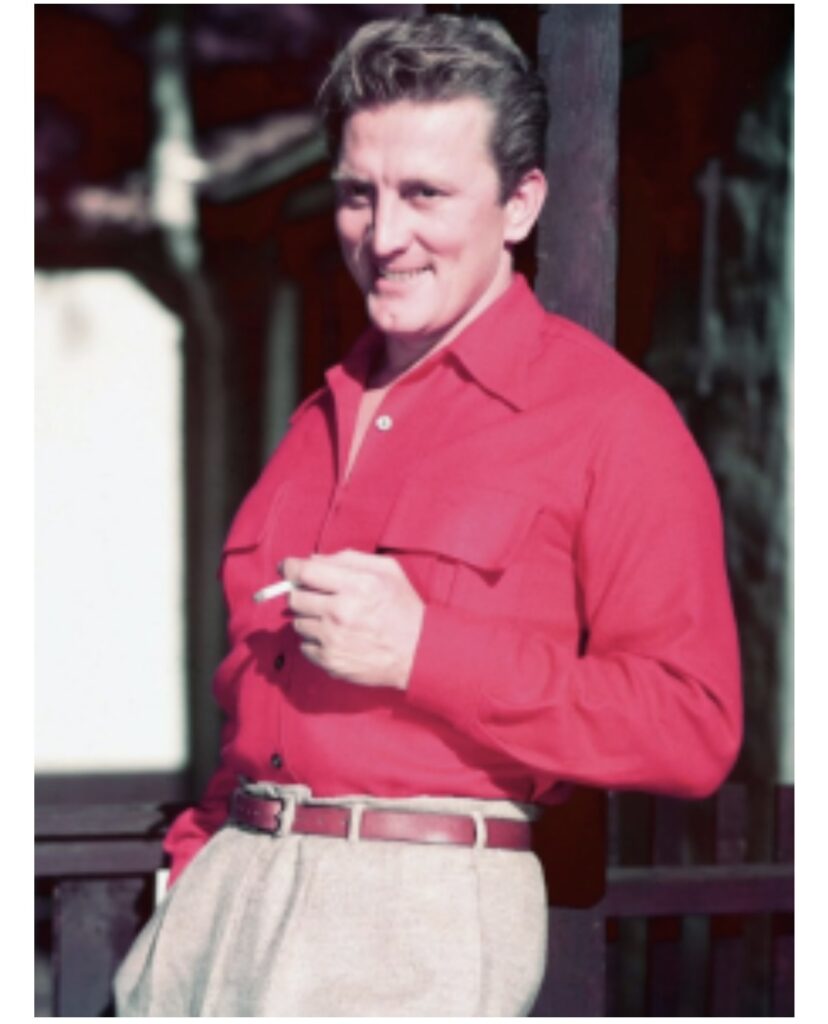
As the decades progressed, Douglas continued to work steadily, adapting to a changing industry while maintaining the fierce individuality that defined his early career. Even as new generations of actors emerged, his presence retained its gravity. Films such as Lonely Are the Brave (1962) and Seven Days in May (1964) further demonstrated his willingness to tackle politically and socially resonant themes, reinforcing his reputation as an artist who valued substance as much as success.
Off-screen, Douglas’s legacy was equally profound. A prolific author, he wrote several memoirs and novels that offered candid reflections on fame, failure, survival, and redemption. After surviving a helicopter crash in 1991 and a severe stroke in 1996, he became an outspoken advocate for recovery, perseverance, and gratitude, inspiring countless admirers with his resilience and optimism. His philanthropic efforts, particularly in education, healthcare, and the arts, quietly but powerfully improved lives far beyond Hollywood.

Kirk Douglas lived more than a century, witnessing—and shaping—nearly the entire modern history of American cinema. His career was not merely a collection of iconic performances, but a statement of values: courage, independence, and an unwavering belief in speaking one’s truth. He proved that stardom and integrity need not be mutually exclusive.



Leave a Comment