

Born in Tokyo in 1916 to British parents, Olivia de Havilland seemed destined for a life beyond the ordinary. After relocating to California as a child, she would rise to become one of Hollywood’s most respected and influential figures—admired not only for her luminous beauty, but for her intelligence, resolve, and unwavering independence in an industry that rarely rewarded such traits.

The Journey to Stardom
De Havilland’s ascent began in the 1930s, when she starred opposite Errol Flynn in a series of swashbuckling adventure films. Their chemistry lit up the screen in classics like Captain Blood and The Adventures of Robin Hood, quickly establishing them as one of Hollywood’s most beloved on-screen pairings.
Yet Olivia was never content to remain confined to decorative or romantic roles. From early on, she sought characters with emotional depth—women who felt real, complex, and human.
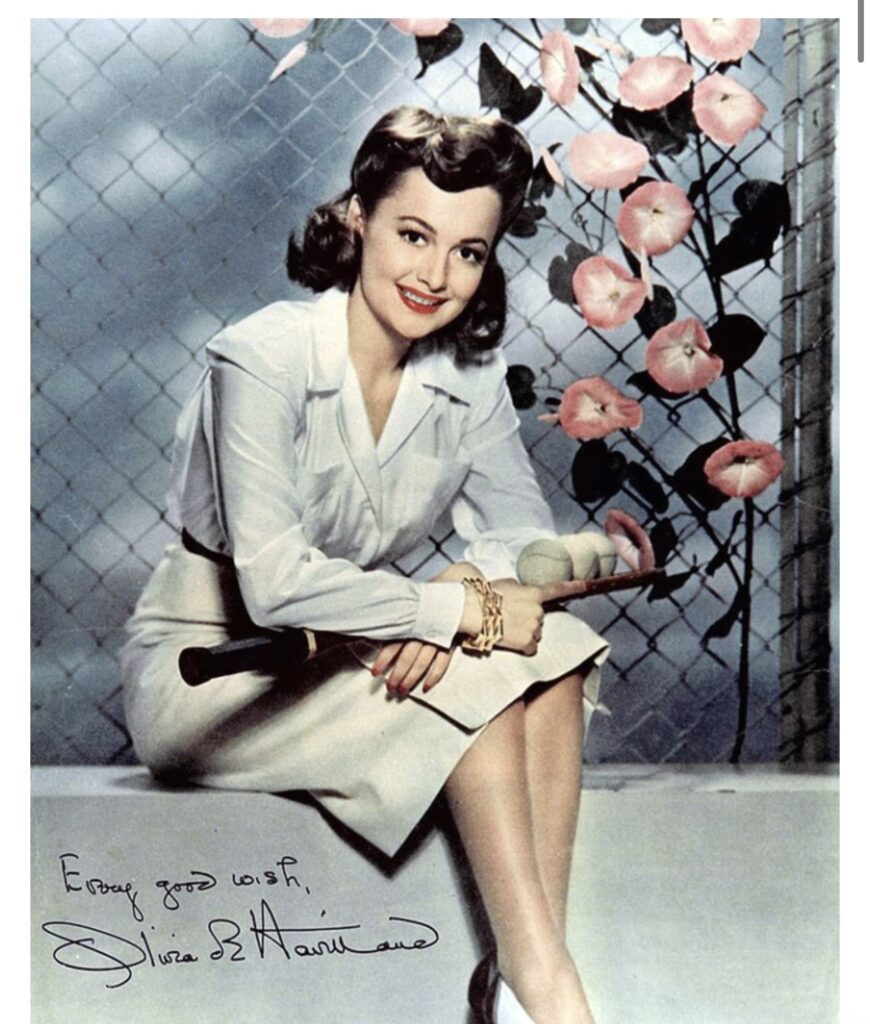
That ambition found its most famous early expression in her portrayal of Melanie Hamilton in Gone with the Wind (1939). Subtle, compassionate, and quietly strong, Melanie stood in powerful contrast to the film’s more flamboyant characters. The performance earned de Havilland an Academy Award nomination and revealed her remarkable ability to convey strength through restraint.
An Actress of Extraordinary Range
The 1940s marked the pinnacle of her artistic achievements. Refusing to be typecast, de Havilland deliberately chose challenging, psychologically rich roles. Her performances in To Each His Own (1946) and The Heiress (1949) earned her two Academy Awards for Best Actress, firmly establishing her as one of the finest dramatic actresses of her generation.
These roles showcased her mastery of transformation—vulnerable yet resolute, gentle yet powerful—proving she was far more than a studio-era starlet. She was a serious artist.
A Groundbreaking Win for Actors’ Rights
Off-screen, Olivia de Havilland made history in a way that reshaped Hollywood forever. In 1943, she took the extraordinary step of suing Warner Bros. over the studio’s practice of extending contracts indefinitely by suspending actors who refused roles.
Her victory resulted in what became known as the “De Havilland Law,” which limited the length of personal service contracts in California. This landmark decision weakened the iron grip of the studio system and granted actors greater freedom and legal protection. Countless performers—then and now—owe their creative autonomy in part to her courage.
A Life of Grace and Dignity
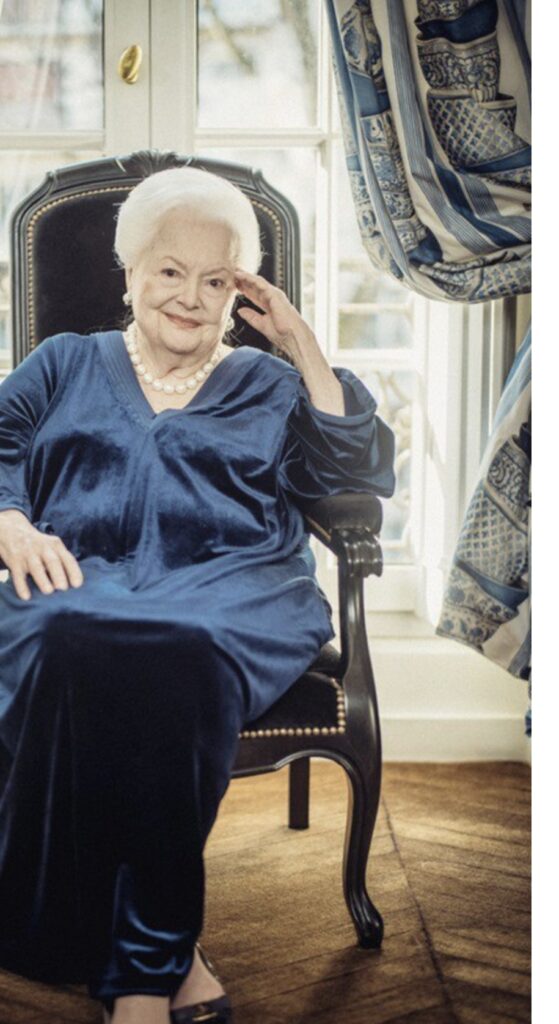
After the 1950s, de Havilland chose a quieter, more private life, moving to Paris. She continued acting selectively, always on her own terms, and remained a symbol of elegance and discretion. Despite a widely publicized rivalry with her sister, fellow Oscar winner Joan Fontaine, Olivia carried herself with remarkable composure throughout her life.
In her later years, honors continued to arrive. She was named a Dame at the age of 101 and lived to 104, bearing witness to nearly the entire history of modern cinema.
A Legacy That Changed Hollywood
Olivia de Havilland was more than a legendary actress—she was a trailblazer who reshaped the balance of power in Hollywood. Her legacy is one of courage, integrity, and timeless class. She proved that grace and strength are not opposites, and that standing up for one’s principles can change an entire industry.



Leave a Comment